
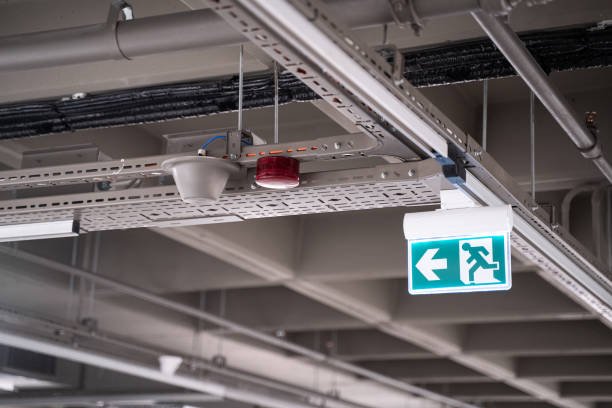
Emergency lighting is an essential part of fire safety in commercial and public buildings. In the event of a power failure or fire, emergency lighting ensures that occupants can safely find escape routes and exits.
Many businesses are unaware that emergency lighting systems must be regularly tested and maintained to comply with UK fire safety regulations.
Failure to maintain emergency lighting could put lives at risk and lead to enforcement action by fire authorities.
What Is Emergency Lighting?
Emergency lighting automatically switches on when normal lighting fails. It helps people safely evacuate a building during an emergency.
Emergency lighting is commonly installed in:
- Offices
- Schools
- Warehouses
- Care homes
- Shops
- Blocks of flats
It is particularly important in buildings where people may be unfamiliar with escape routes.
Legal Requirements
Under the Regulatory Reform (Fire Safety) Order 2005, the Responsible Person must ensure that emergency lighting systems are properly maintained and in working order.
Guidance standards such as BS 5266 recommend regular inspection and testing.
How Often Should Emergency Lighting Be Tested?
Monthly Functional Test
- Lights should be switched to emergency mode briefly
- Check that fittings illuminate
- Check lights are not damaged
Annual Full Duration Test
- Lights must operate for their full rated duration (usually 3 hours)
- Batteries must last the full test period
- Any failures must be repaired
A record of testing should be kept in a fire safety logbook.
Common Problems Found
During emergency lighting inspections, common issues include:
- Failed batteries
- Lights not working
- Missing fittings
- Damaged units
- No test records
Many businesses only discover faults when a full test is carried out.
Professional Emergency Lighting Testing
Professional testing ensures your emergency lighting system works correctly and meets legal requirements.
Approved Fire Risk Assessments Ltd provides emergency lighting inspections and fire risk assessments for businesses across Kent and the South East.
If your emergency lighting has not been tested recently, it may be time for a review.